Sleepy Brain Night Clipart: Whimsical Rest
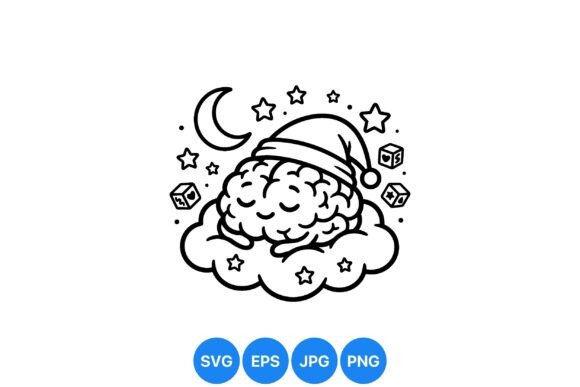
In the visual landscape of modern communication, a single image can convey complex emotions more effectively than paragraphs of text. For professionals seeking to illustrate concepts of rest, mental recovery, or nighttime routines, finding the right asset is often a challenge. Sleepy Brain Night Clipart addresses this need by offering a distinctive visual metaphor: a sleepy brain character with closed eyes wearing a nightcap rests peacefully on a cloud with stars moon and decorative cubes around in black line art style calm and whimsical. This specific imagery moves beyond generic representations of sleep, providing a nuanced tool for creators who want to humanize abstract cognitive processes.
The Power of Visual Metaphors in Communication
When educators, marketers, or health professionals discuss the importance of sleep, they often struggle to find visuals that are both accurate and engaging. Standard stock photos of people sleeping can feel intrusive or too literal. In contrast, anthropomorphizing the brain creates an immediate emotional connection. The concept of a brain needing rest is universally understood, yet rarely depicted with such charm. By utilizing Sleepy Brain Night Clipart, content creators can soften serious topics like burnout, cognitive fatigue, or the science of REM cycles without losing credibility.
This approach is particularly effective for adults aged 20–50 who consume digital content across various platforms. Whether you are designing a slide deck for a corporate wellness presentation or creating a blog post about productivity hacks, the whimsical nature of the artwork invites the audience to engage rather than tune out. The black line art style ensures that the illustration remains clean and professional, avoiding the clutter often associated with overly colorful or cartoonish graphics.
Technical Versatility for Every Platform
One of the most significant practical benefits of this asset is its technical flexibility. The download includes a ZIP folder with SVG, PNG, JPG, and EPS files. This variety is not merely a convenience; it is a necessity for modern design workflows. Different platforms and use cases demand different file formats to maintain quality and performance.
- SVG and EPS Files: These vector formats are essential for print media and large-scale digital displays. Because the artwork is 100% vector, it scales infinitely without pixelation. If you are printing a poster for a therapy office or designing a billboard campaign promoting mental health awareness, these files ensure the lines remain crisp and the details sharp at any size.
- PNG and JPG Files: These raster formats are optimized for web use, social media posts, and email newsletters. They load quickly and display correctly across all devices, from smartphones to desktop monitors.
For freelancers and small business owners, having access to high-contrast files simplifies the decision-making process. You do not need to spend hours converting files or worrying about resolution issues. The high-contrast nature of the black line art also means the image stands out clearly against both light and dark backgrounds, making it adaptable for a wide range of brand color palettes.
Enhancing Educational Materials and Presentations
Educators and trainers frequently face the task of explaining complex biological or psychological concepts to diverse audiences. When discussing the impact of sleep deprivation on memory or learning, a static diagram can be dry and disengaging. Integrating Sleepy Brain Night Clipart into your curriculum or training materials adds a layer of narrative that aids retention. The image of the brain resting on a cloud surrounded by stars visually reinforces the idea of "dreaming" and "mental processing."
Consider a scenario where a teacher is explaining the importance of study breaks. Using this clipart allows them to show the brain "recharging," making the advice actionable and memorable. Similarly, corporate trainers focusing on employee well-being can use the whimsical character to destigmatize the conversation around mental health. It transforms a potentially heavy topic into something approachable and relatable, fostering a safer environment for discussion.
Streamlining Design Workflows for Creators
Time is a critical resource for designers, bloggers, and entrepreneurs. Sourcing high-quality, royalty-free illustrations that fit a specific aesthetic can be time-consuming. Many free resources lack the professional polish required for commercial projects, while premium subscriptions can be cost-prohibitive for one-off needs. Sleepy Brain Night Clipart offers a middle ground: a premium-quality asset available as a standalone purchase.
The inclusion of multiple file formats within a single ZIP folder significantly reduces the friction in the design process. A graphic designer can immediately drop the SVG into Adobe Illustrator for editing or place the PNG directly into a Canva template for a quick social media graphic. This efficiency allows professionals to focus on strategy and messaging rather than technical troubleshooting. Furthermore, the consistent style of the black line art ensures that if you decide to expand your visual library, this piece serves as a cohesive anchor for other similar assets.
Strategic Applications for Marketers and Publishers
For publishers and content marketers, the visual identity of an article or book cover plays a pivotal role in click-through rates and reader engagement. The whimsical yet calm aesthetic of this clipart makes it ideal for lifestyle blogs, self-help books, and wellness magazines. It signals to the reader that the content is thoughtful and focused on holistic well-being.
Imagine a blog post titled "Why Your Brain Needs a Digital Detox." Pairing this headline with an image of a brain wearing a nightcap creates an instant association between technology, rest, and recovery. The decorative cubes and celestial elements (stars and moon) add depth to the composition, suggesting a universe of thought and dreams. This level of detail elevates the perceived value of the content, encouraging readers to stay longer and share the material.
Considerations for Implementation
While Sleepy Brain Night Clipart is highly versatile, it is important to consider the context in which it is used. The whimsical, cartoon-like style may not be appropriate for highly clinical or forensic medical documents where strict realism is required. In those scenarios, anatomical diagrams would be more suitable. However, for general education, marketing, coaching, and lifestyle content, the stylized approach is a distinct advantage.
Additionally, while the black line art style is neutral, users should ensure that the background colors chosen complement the high-contrast lines. Placing the image on a busy, patterned background could reduce readability. Testing the asset in its intended layout before finalizing a project is always recommended to ensure the visual hierarchy remains clear.
Supporting Goals Through Visual Storytelling
Ultimately, the value of this clipart lies in its ability to support broader goals. For entrepreneurs building a personal brand around productivity and wellness, consistent and meaningful visuals help establish authority and trust. For educators, it simplifies complex ideas. For designers, it saves time and ensures quality. The Sleepy Brain Night Clipart is more than just a drawing; it is a strategic tool that enhances communication, strengthens brand identity, and resonates with audiences on an emotional level.
By choosing assets that combine technical excellence with thoughtful design, professionals can create content that not only informs but also inspires. The peaceful imagery of a brain resting under the stars reminds us all of the universal need for rest, making it a powerful ally in the mission to promote better mental health and balanced living.