Hand Drawn Valentine Patterns: A Practical Evaluation
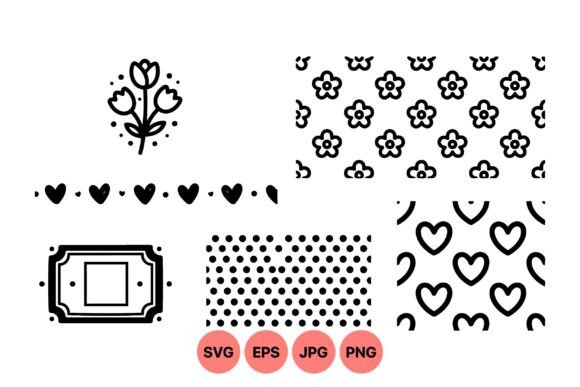
Designers and crafters frequently encounter the challenge of selecting background textures that convey a specific mood without overwhelming the primary content. Hand Drawn Valentine Patterns represent a specific category of digital assets designed to address this need. This collection consists of black and white seamless vector patterns featuring motifs such as flowers, hearts, polka dots, and ticket icons. The aesthetic is defined by an elegant and simple approach, utilizing high-contrast line work to create decorative elements suitable for various applications. Understanding the technical specifications, aesthetic implications, and practical utility of these patterns is essential for determining if they align with your specific project requirements.
Understanding the Asset Structure and Format
The core value proposition of Hand Drawn Valentine Patterns lies in their versatility regarding file formats and scalability. Unlike raster images which can lose quality when resized, this collection is built on vector technology. The download package typically includes a ZIP folder containing SVG, PNG, JPG, and EPS files. This multi-format delivery ensures compatibility across different software environments, from web design tools like Adobe XD or Figma to desktop publishing software like InDesign or Illustrator.
The inclusion of SVG and EPS files is particularly significant for professional workflows. These vector formats allow the artwork to be scaled infinitely without pixelation. Whether the pattern is applied to a small business card or a large-scale banner, the lines remain crisp and sharp. The 100% vector nature of the SVG and EPS components ensures that the high-contrast black and white lines do not blur or degrade. Conversely, the provided PNG and JPG files offer immediate usability for contexts where vector editing is unnecessary, such as quick social media graphics or web backgrounds where browser compatibility is a priority.
Aesthetic Characteristics and Visual Impact
The visual identity of these patterns is rooted in a "hand-drawn" style. This technique mimics the irregularity and organic feel of ink sketches, distinguishing them from the rigid precision of computer-generated geometric shapes. The motifs—flowers, hearts, polka dots, and ticket icons—are rendered in a monochromatic palette. This black and white scheme serves a functional purpose beyond mere style; it allows the pattern to function as a neutral backdrop that does not compete with colored text or other graphical elements.
High contrast is a defining feature of this collection. The stark difference between the black lines and the white background creates a bold visual statement. This characteristic makes the patterns highly legible even at smaller scales. However, the simplicity of the design means the texture relies entirely on line weight and composition. The elegance comes from the restraint of the design, avoiding cluttered details that might distract the viewer. For projects requiring a vintage, romantic, or artisanal feel, this hand-sketched aesthetic provides an immediate emotional connection that polished, corporate-style vectors often lack.
Benefits of Using Vector Seamless Patterns
Adopting Hand Drawn Valentine Patterns offers several distinct advantages for designers and creators:
- Scalability: Because the core files are vector-based (SVG, EPS), there is no limit to the size at which the pattern can be used. This eliminates the need to purchase multiple resolutions for different print sizes.
- Customization: Vector files allow users to manipulate individual elements. A designer can easily change the color of the hearts or flowers to match a brand palette, or adjust the spacing of the seamless repeat to fit a specific layout.
- Seamless Tiling: The patterns are constructed to tile perfectly. This is crucial for creating continuous backgrounds for wrapping paper, fabric prints, or website headers where visible seams would break immersion.
- File Efficiency: Vector files generally have smaller file sizes compared to high-resolution raster images, which improves load times for web applications.
Tradeoffs and Considerations
While the benefits are clear, there are tradeoffs to consider before integrating these assets into a workflow. The primary limitation is the monochromatic nature of the base design. While colors can be changed in vector software, the default presentation is strictly black and white. Projects requiring complex gradients, shadows, or photorealistic textures may find these patterns too flat or stylized.
Furthermore, the "hand-drawn" style implies a level of imperfection. While this is desirable for artistic projects, it may clash with brands that require strict geometric precision or a minimalist, ultra-modern look. The organic lines might appear inconsistent against rigid typography or grid-based layouts. Additionally, while the high contrast is excellent for readability, it can sometimes be visually aggressive if used as a full-screen background behind light-colored text. Designers must carefully manage opacity and layering to ensure text remains accessible.
Ideal Use Cases
Hand Drawn Valentine Patterns are a strong fit for specific scenarios where the aesthetic goals align with the asset's characteristics:
- Print Media: Wedding invitations, greeting cards, and stationery benefit greatly from the romantic and artisanal feel of the heart and flower motifs. The vector format ensures high-quality printing results.
- Web Backgrounds: The seamless nature makes these ideal for section dividers or subtle background textures on event websites, blogs, or e-commerce landing pages focused on gifts or romance.
- Surface Pattern Design: The repeating structure is perfect for textile design, wrapping paper, or packaging where a continuous, engaging pattern is required.
- Decorative Elements: The ticket icons and polka dots can serve as framing elements or bullet points in presentations and reports, adding a touch of whimsy without overwhelming the data.
When to Consider Alternatives
Despite their utility, these patterns may not be the optimal choice for every project. Alternatives should be considered in the following situations:
- Photorealistic Requirements: If the project demands a realistic texture, such as watercolor washes or grainy film effects, a hand-drawn line art pattern will likely feel out of place.
- Corporate Branding: Companies with strict brand guidelines emphasizing modernism, sleekness, or technological innovation may find the playful, sketched style inappropriate.
- Complex Color Grading: If the design requires intricate shading or blending modes that cannot be easily achieved by simply recoloring vector paths, a more complex raster-based texture might be necessary.
- Accessibility Concerns: For users with visual impairments, high-contrast black and white patterns can sometimes reduce the readability of overlaid text. In such cases, solid colors or lower-contrast textures might be safer choices.
Decision-Making Insights
Before committing to Hand Drawn Valentine Patterns, evaluate your project's long-term needs. Ask whether the flexibility of vector files outweighs the potential limitations of a fixed stylistic direction. If you anticipate needing to adapt the pattern for various mediums—from mobile screens to large banners—the SVG and EPS formats provide significant future-proofing. However, if the project is a one-off digital graphic with specific color grading requirements, a pre-styled raster image might save time.
Ultimately, the decision rests on the balance between aesthetic alignment and technical necessity. The combination of flowers, hearts, polka dots, and ticket icons offers a versatile toolkit for romantic and celebratory themes. By understanding the strengths of the high-contrast vector format and the constraints of the hand-drawn style, creators can make informed choices that enhance their designs rather than merely decorating them. Whether used for a wedding invitation suite or a seasonal website update, these patterns provide a reliable foundation for elegant, scalable visual communication.